-
 Russian Bokhara, Russia. 1940's A Russian Bokhara carpet is a distinctive and elegant rug known for its repeating gul motifs arranged in neat rows, reflecting Central Asian design influences. Typically handwoven using fine wool, these carpets feature a rich palette dominated by deep reds, burgundies, and browns, often accented with black and ivory. The soft texture and moderate knot density create a plush, durable surface suitable for both traditional and contemporary interiors. Originating from Russian manufacturing centers inspired by Turkmen patterns, Russian Bokhara rugs blend craftsmanship with cultural heritage, making them popular for their timeless appeal, warmth, and versatile decorative style.
 -
 Qashkai, Iran. 1930's A diamond design Qashqai rug showcases the rich nomadic weaving traditions of the Qashqai people from southwestern Iran. This handwoven carpet features bold, geometric diamond patterns arranged symmetrically across the field, often framed by intricate borders with complementary motifs. Crafted from high-quality wool, the rug displays vibrant colours such as deep reds, blues, ivory, and earth tones, creating striking contrasts. Its tight knotting and durable construction reflect the skill of Qashqai artisans. Celebrated for its tribal authenticity and artistic expression, the diamond design Qashqai rug adds warmth and cultural depth to any space, embodying both function and heritage.
 -
 Afshar, Iran. 1900's The Roses Afshar rug is a stunning example of tribal artistry from the Afshar nomads of Persia. Renowned for its rich, warm color palette dominated by deep reds and soft rose hues, the rug features intricate floral motifs, particularly stylized rose blossoms scattered across the field. Its design balances traditional tribal patterns with elegant floral elements, creating a harmonious blend of rustic charm and refined beauty. Woven from high-quality wool with a dense, durable weave, the Roses Afshar rug showcases exceptional craftsmanship. This timeless piece adds warmth and character to any space, embodying both cultural heritage and artistic finesse.
 -
 Kazak, South Caucasus, Russia. Late 1900's A diamond-shaped Kazak rug design is a striking example of traditional Caucasian craftsmanship. Characterized by bold, geometric diamond motifs arranged in a repeating pattern, this rug showcases vibrant colors such as deep reds, rich blues, and warm golds. The diamonds often feature intricate internal detailing, including smaller shapes, crosses, or stylized floral elements, framed by thick, contrasting borders. The handwoven wool fibers create a textured surface with a slightly coarse feel, highlighting the rug’s durability. This design symbolizes protection and strength, making the diamond-shaped Kazak both visually captivating and culturally meaningful in its heritage.
 -
 Tabriz Haji Jalil, Iran. Early 1900's This breathtaking antique Persian Tabriz Haji Jalili carpet, dating from the late 19th century, is a masterpiece of exceptional craftsmanship. Woven by master artisans with an unusually fine city weave and high-quality wool, it likely was a custom commission. The rug’s intricate floral design shines with natural brilliance, enhanced by a soft color palette of rust, brown, cream, and light yellow. Its elegant surface evokes imagery of a warm sunset and royal tapestries. This rare and magnificent rug is a timeless treasure, perfect for those who deeply appreciate the finest examples of Persian carpet artistry.
 -
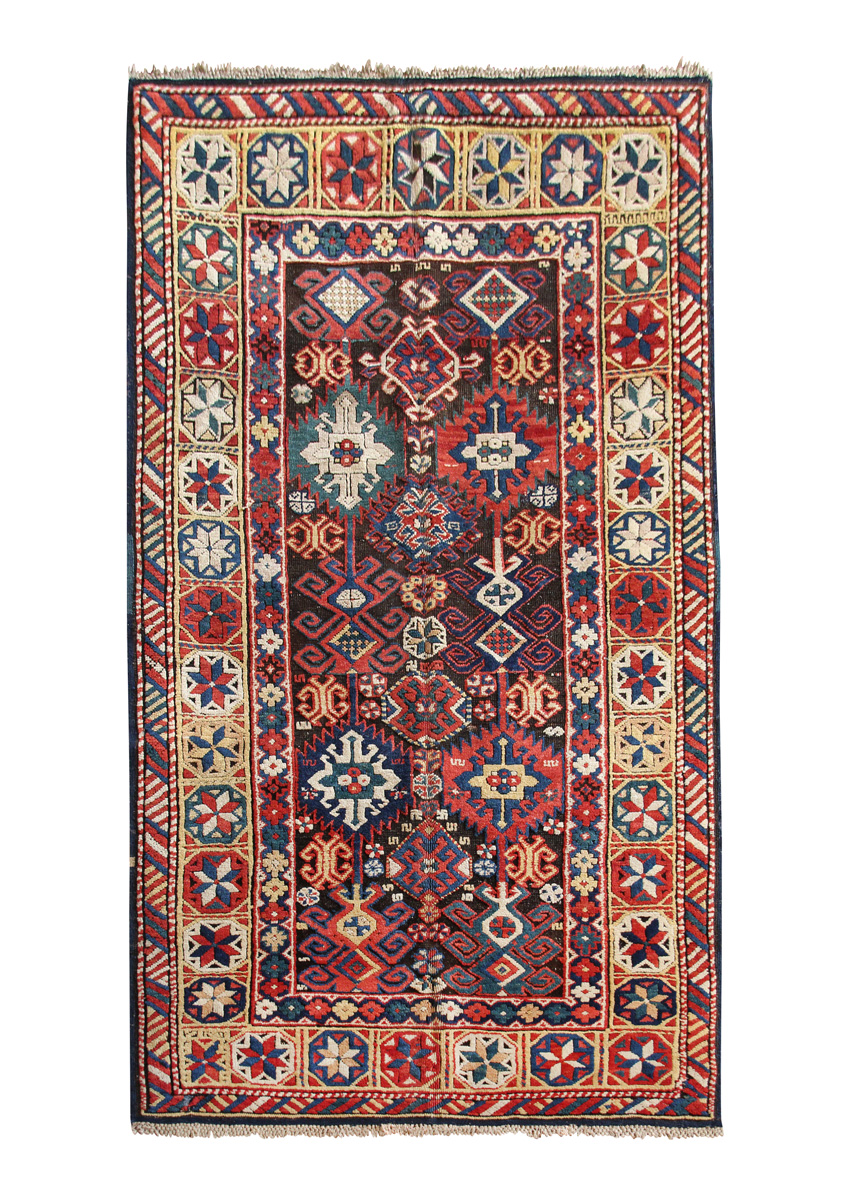 Derben Kuba, South Causasus, Russia. Early 1900's A Derben Kuba rug is a finely crafted Caucasian textile originating from the Kuba region in Azerbaijan. Known for its dense, durable weave, this rug features intricate geometric patterns and bold, vivid colours—often rich reds, deep blues, and earthy tones. The design typically includes repeating medallions, stylized floral motifs, and tribal symbols, reflecting Kuba’s rich weaving heritage. These rugs are prized for their precise craftsmanship and strong, resilient wool. The Derben Kuba’s distinctive aesthetic combines tradition with artistry, making it a sought-after piece for collectors and lovers of authentic Caucasian carpets.
 -
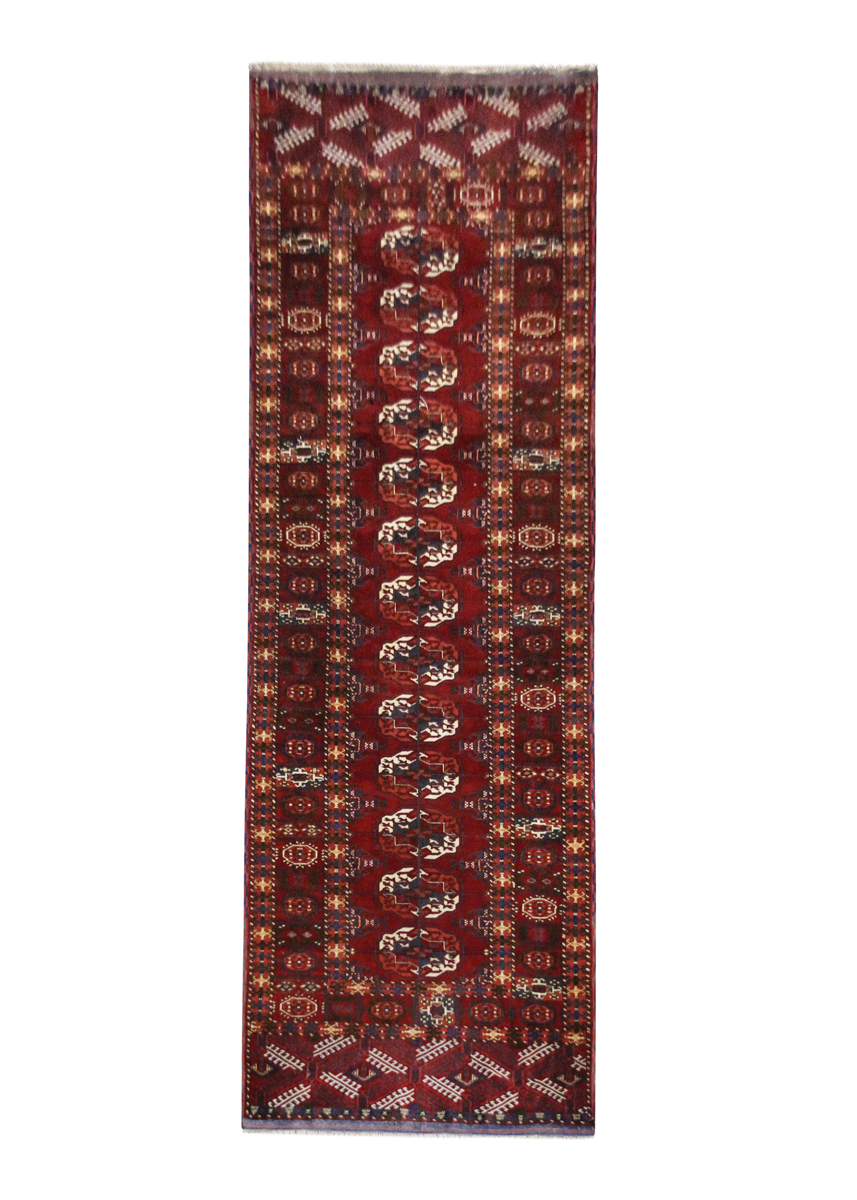 Russian Bokhara Runner The Russian Bokhara carpet is a distinctive hand-knotted rug known for its refined elegance, rich colours, and repeating geometric patterns. Originating as a variation of the traditional Bokhara rug style, this type often reflects a blend of Central Asian design influence with Russian or Eastern European craftsmanship and materials.
 -
 Mohtasham Kashan Silk, Iran. 1920's A Silk Mohtasham Kashan rug is one of the most exquisite and collectible types of Persian carpets, known for its luxurious materials, exceptional craftsmanship, and historical prestige. These carpets originate from Kashan, a renowned weaving center in central Iran, and are attributed to the legendary master weaver Mohtasham during the late 19th to early 20th century.
 -
 Bakhtiyar, Iran. 1960's This striking Bakhtiyar rug features a bold medallion design set against a vivid red background, a hallmark of the weaving traditions from the Bakhtiari tribes of western Persia. The rich red field provides a dramatic contrast to the central medallion, often adorned with intricate floral motifs and geometric detailing.
 -
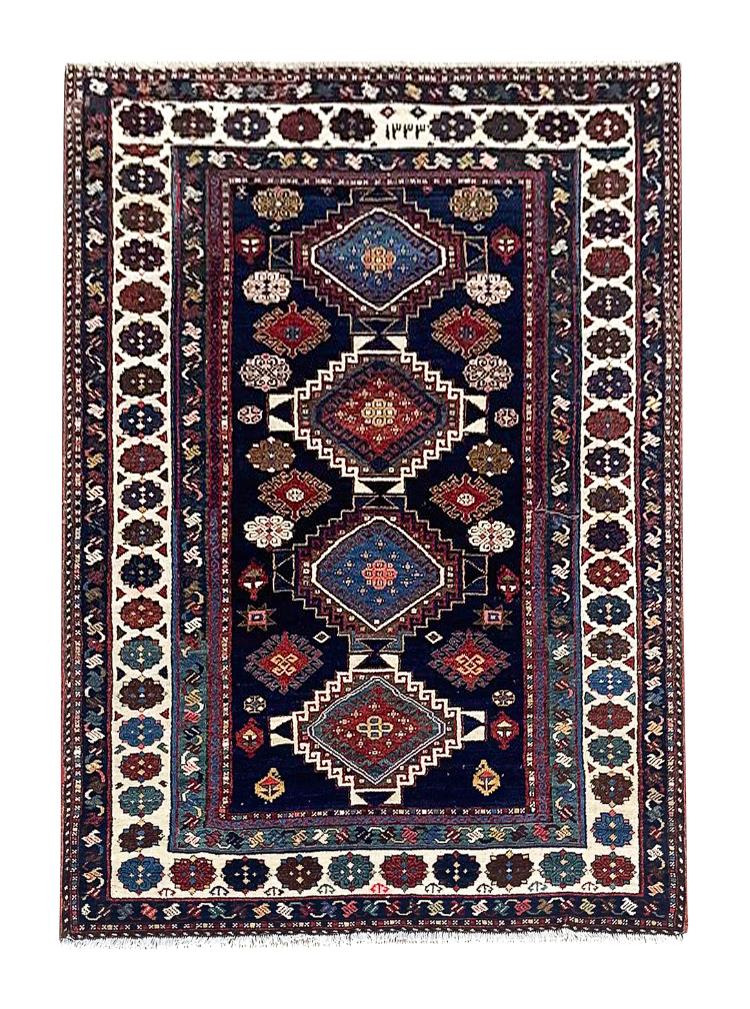 Antique Kazak This antique Kazak rug showcases the bold artistry of the Caucasus, with its striking blue background creating a vibrant canvas for tribal motifs. Geometric medallions, hooked diamonds, and stylized stars are arranged with symmetry, embodying the strength and individuality of Kazak weaving traditions.
 -
 Fine Tabriz, Iran. 1960's This fine Tabriz rug exemplifies Persian weaving mastery, featuring an elegant cream-colored background that enhances its refined all-over pattern. Instead of a central medallion, the design flows continuously across the field, filled with intricate floral sprays, scrolling vines, and delicate palmettes.
 -
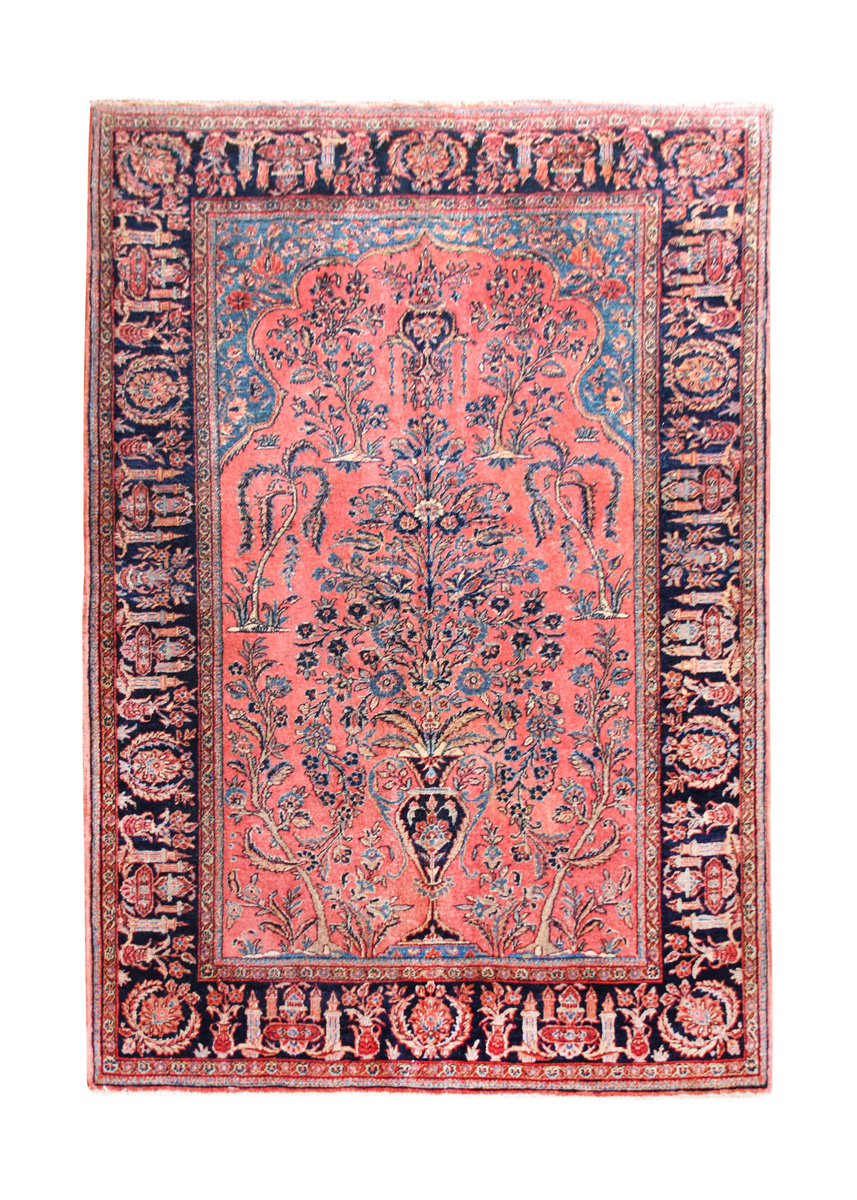 Sarouq, Iran. 1920's This Sarouq rug features the iconic Tree of Life design, a motif symbolizing growth, eternity, and connection between earth and heaven. Woven with exceptional craftsmanship, the central tree rises gracefully from the base, branching out with stylized flowers, leaves, and palmettes across a rich field.
 -
 Shrivan, South Caucasus, Russia. 1900's This antique Shirvan rug, woven in the Caucasus, reflects the distinctive artistry and character of one of the region’s most celebrated weaving centers. Known for their finely knotted structure and clarity of design, Shirvan rugs often feature geometric motifs such as hooked medallions, stars, and stylized floral elements.
 -
 Qashqai, Iran. 1940's This antique Qashqai rug embodies the spirit and artistry of the nomadic tribes of southern Persia. Renowned for their bold geometric designs and vibrant palettes, Qashqai weavers often filled their rugs with diamond-shaped medallions, stylized animals, and floral motifs drawn from the natural world around them.
 -
 Oushak, Turkey. Early 1900's This Turkish Oushak rug presents a rare and enchanting pink background, a feature that adds softness and warmth to its overall character. Oushak rugs are celebrated for their large-scale motifs, often featuring bold medallions, stylized palmettes, and flowing vine patterns, all rendered here in gentle harmony against the rosy field.
 -
 Malayer, Iran. 1900's This antique Malayer rug, woven in western Persia, is celebrated for its artistry, individuality, and fine craftsmanship. Malayer weavers often favoured all-over patterns or repeating boteh, diamond, and lattice designs, each rendered with remarkable precision. The palette is typically rich yet balanced, combining deep indigo blues, madder reds, and ivory highlights, all derived from natural dyes.
WE OFFER WORLDWIDE SHIPPING


OPERATING HOURS
Monday – Friday: 8:00am – 5:00pm
View by appointment
CONTACT US
Tel: +27 (11) 783 0701
Tel: +27 (11) 783 0706
Cell: +27 83 457 7458
Terms and Conditions
ADDRESS
7 Marion Street, Sandown,
Sandton, 2031, Johannesburg

© Copyright 2012 - 2026| Persian House International | All Rights Reserved | Powered by Yip Digital