-
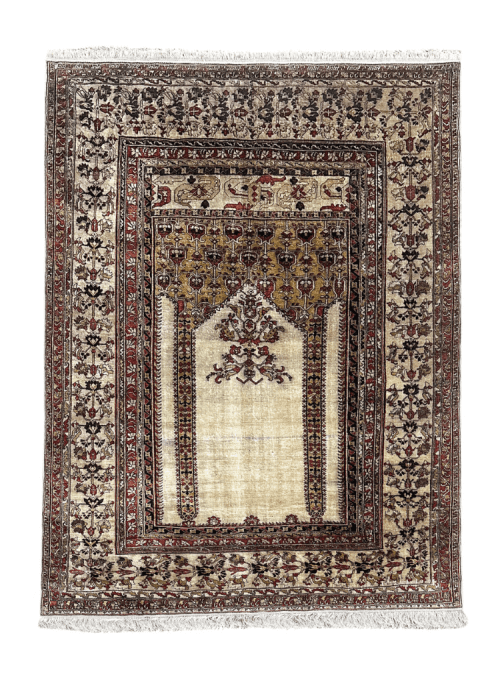 Silk Heriz This rare Silk Heriz rug features an ivory background with a refined mihrab design, framed by a radiant gold border. Handwoven with luminous silk and exceptional detail, it is a luxurious and collectible Persian masterpiece of elegance and spiritual symbolism. Price on Request.
 -
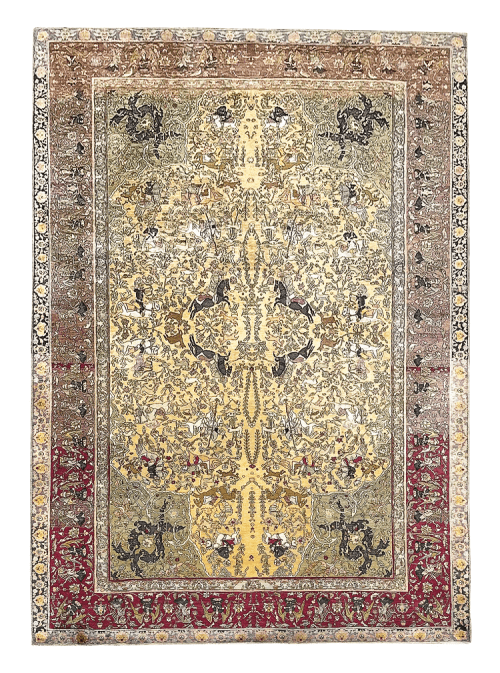 Silk and Metal Kum Kapu This rare Kumkapi rug, woven in silk and metal threads, depicts an exquisite hunting scene with finely detailed figures and animals. With jewel-like brilliance, extraordinary knot density, and Ottoman refinement, it is a luxurious and highly collectible masterpiece. Price on Request.
 -
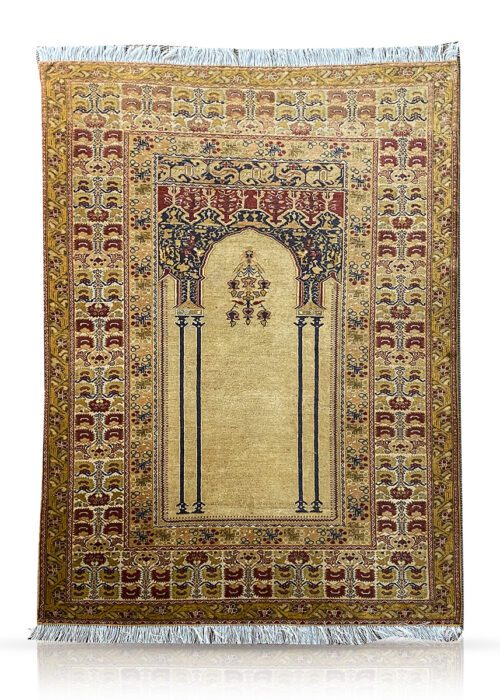 Turkish Panderna, early 1900's This rare and collectible Panderma Prayer Rug is a stunning example of antique Anatolian craftsmanship. Woven in the late 19th century in western Anatolia, Turkey, it features vibrant, naturally saturated vegetable dyes. The rug showcases traditional design motifs characteristic of the Balikesir region, making it a beautiful and authentic piece of Turkish heritage and wall décor.
 -
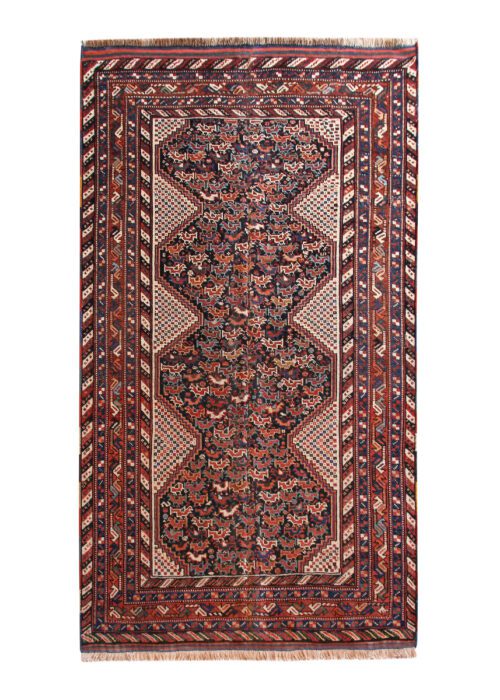 Qashqai, Iran. 1940's This antique Qashqai rug embodies the spirit and artistry of the nomadic tribes of southern Persia. Renowned for their bold geometric designs and vibrant palettes, Qashqai weavers often filled their rugs with diamond-shaped medallions, stylized animals, and floral motifs drawn from the natural world around them.
 -
 Malayer, Iran. Mid 1900’s This antique Malayer rug features a striking light blue diamond-shaped medallion set against a richly patterned field. Handwoven with natural dyes and fine wool, it combines durability with artistic charm, making it a unique and elegant example of Persian village weaving. Circa 1920
 -
 Russian Bokhara Runner The Russian Bokhara carpet is a distinctive hand-knotted rug known for its refined elegance, rich colours, and repeating geometric patterns. Originating as a variation of the traditional Bokhara rug style, this type often reflects a blend of Central Asian design influence with Russian or Eastern European craftsmanship and materials.
 -
 Quaskai Woolen, Iran. 1920’s This beautiful antique Persian Quaskai rug, dating from circa 1920, showcases the exceptional weaving skills of the nomadic Quaskai tribe of southern Persia. Known for their strong community spirit, Quaskai women collaborate in weaving and gathering natural dyes, reflecting their deep connection to each other and the environment. The rug features vibrant colors and tribal designs inspired by nature, with rows of abstract geometric floral patterns contrasted by refined, interconnected flowers in the border. Influences from Central Asia and the Caucasus are evident, making this rug a stunning example of Quaskai artistry and tradition.
 -
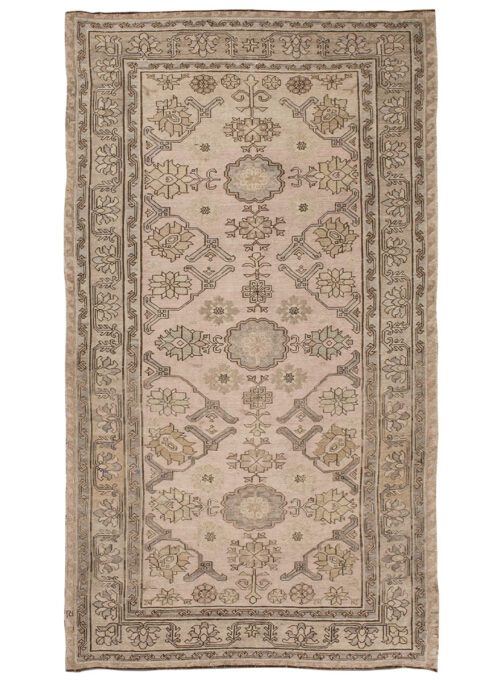 Azerbaijan Kilim, Azerbaijan. 1950's This Azerbaijan Soumak Kilim is a fine example of the flatweave tradition from the Caucasus, celebrated for its strength, artistry, and cultural depth. Woven using the soumak technique, the surface features an embroidered texture with crisp, raised patterns that stand out against the flat ground.
 -
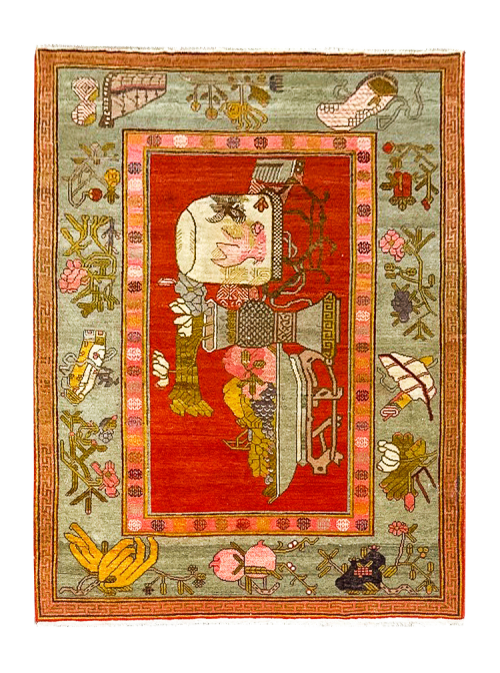 Khotan. Khotan rugs showcase a unique blend of Chinese and Persian design influences, combining motifs like Chinese fretwork and cloud bands with traditional Persian medallions and borders. They feature a soft, muted color palette dominated by earthy tones such as beige, ivory, soft reds, and blues, distinguishing them from more vibrant rugs. Handwoven from high-quality wool and sometimes silk, Khotan rugs are both durable and luxurious. Their designs balance floral motifs with geometric patterns like lattice and repeating medallions. Notably, many Khotan rugs have minimal or no pronounced borders, emphasizing simplicity and elegance
 -
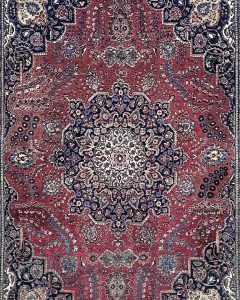
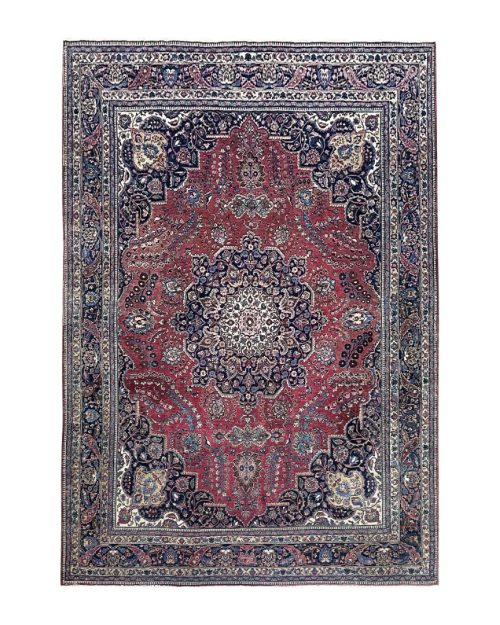 Meshad
-
 Kis Ghiordes, Turkey. 1920's Ghiordes (modern-day Gördes), a town 180 km from Smyrna, was a major carpet production center during the Ottoman Empire and gave its name to the Turkish or symmetrical knot known as the Ghiordes knot. The Kis Ghiordes carpet presented here, dating to the late 19th century and in excellent condition, measures 2.20 x 1.34 meters with a knot density of around 120,000 knots per square meter, using 100% wool for the pile, weft, and warp. These “Kis-Ghiordes” or “bride’s carpets” were traditionally woven by young girls as part of their dowry before marriage.
 -
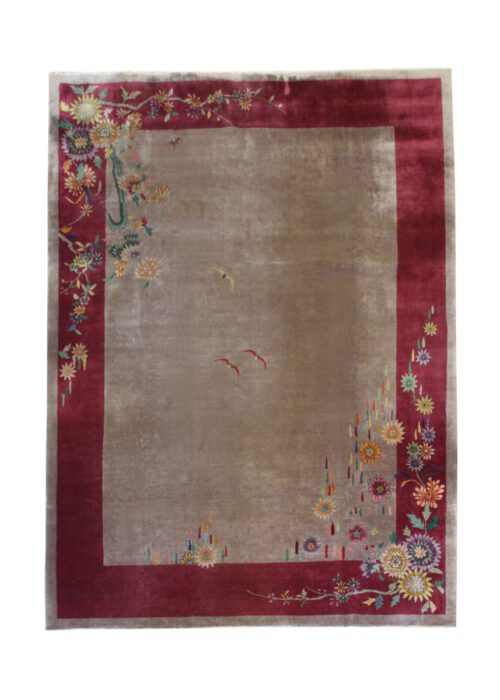 Harvey Nichol, Chinese. 1960's This is an extraordinary and unique antique Art Deco rug, renowned for its exceptional quality and unusually rare colour palette. It features remarkable design elements, showcasing an eye-catching combination of botanical and floral motifs. Rugs of this caliber are highly sought after and seldom found.
 -
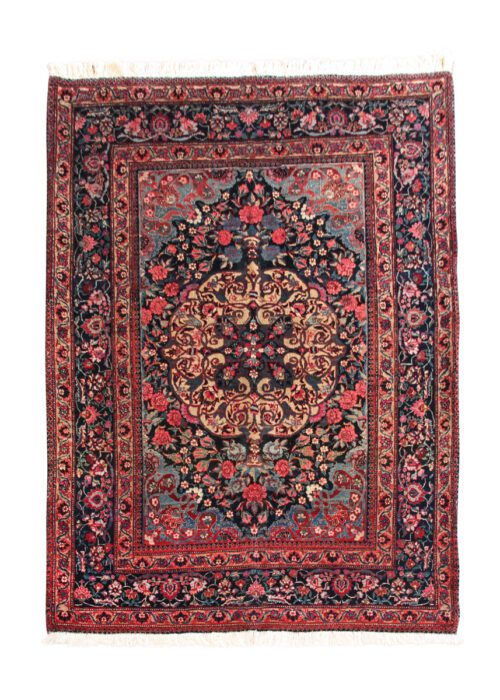 Gol Farhang, Bedjar, Iran. 1930's The Gol Farang Bedjar is a stunning antique rug woven in 1930, showcasing exquisite craftsmanship from its era. This rare piece features intricate patterns and rich, harmonious colors that reflect traditional weaving techniques. Its detailed motifs and durable wool construction highlight the artisan’s skill and cultural heritage. Perfectly aged with a soft patina, the rug adds timeless elegance and historical charm to any space. Ideal for collectors and enthusiasts, the Gol Farang Bedjar represents a valuable example of early 20th-century textile art, blending beauty, history, and functionality into a single masterpiece
 -
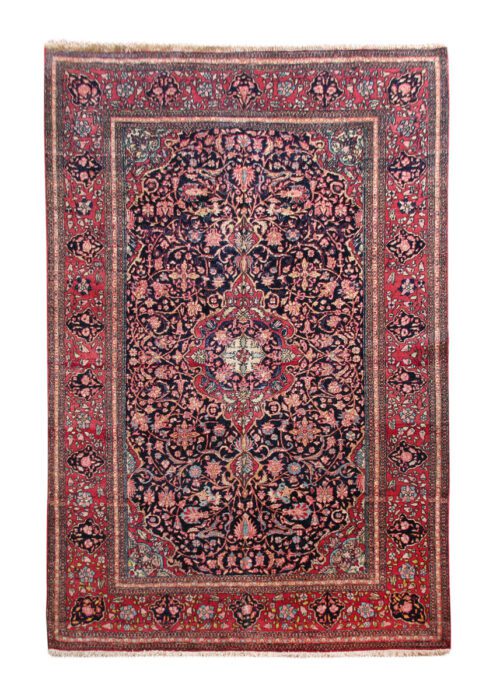 Isfahan, Iran. 1940's The 1930 Isfahan Persian rug showcases a stunning blue field that serves as a vibrant backdrop for intricate floral and medallion motifs, reflecting exquisite craftsmanship. Its rich red border elegantly frames the design, creating a striking contrast that enhances the rug’s visual appeal. Known for fine knotting and detailed artistry, Isfahan rugs often incorporate delicate patterns inspired by nature and Persian tradition. The combination of the deep blue center and bold red border gives this antique rug a timeless sophistication, making it a treasured piece that adds elegance and warmth to any interior setting.
 -
 Bedjar, Iran. 1930's Gol Farang Bedjar is a stunning antique rug woven in 1930, showcasing exquisite craftsmanship from its era. This rare piece features intricate patterns and rich, harmonious colors that reflect traditional weaving techniques. Its detailed motifs and durable wool construction highlight the artisan’s skill and cultural heritage. Perfectly aged with a soft patina, the rug adds timeless elegance and historical charm to any space. Ideal for collectors and enthusiasts, the Gol Farang Bedjar represents a valuable example of early 20th-century textile art, blending beauty, history, and functionality into a single masterpiece.
 -
 Sarouq, Iran. 1920's This Sarouq rug features the iconic Tree of Life design, a motif symbolizing growth, eternity, and connection between earth and heaven. Woven with exceptional craftsmanship, the central tree rises gracefully from the base, branching out with stylized flowers, leaves, and palmettes across a rich field.
WE OFFER WORLDWIDE SHIPPING


OPERATING HOURS
Monday – Friday: 8:00am – 5:00pm
View by appointment
CONTACT US
Tel: +27 (11) 783 0701
Tel: +27 (11) 783 0706
Cell: +27 83 457 7458
Terms and Conditions
ADDRESS
7 Marion Street, Sandown,
Sandton, 2031, Johannesburg

© Copyright 2012 - 2026| Persian House International | All Rights Reserved | Powered by Yip Digital